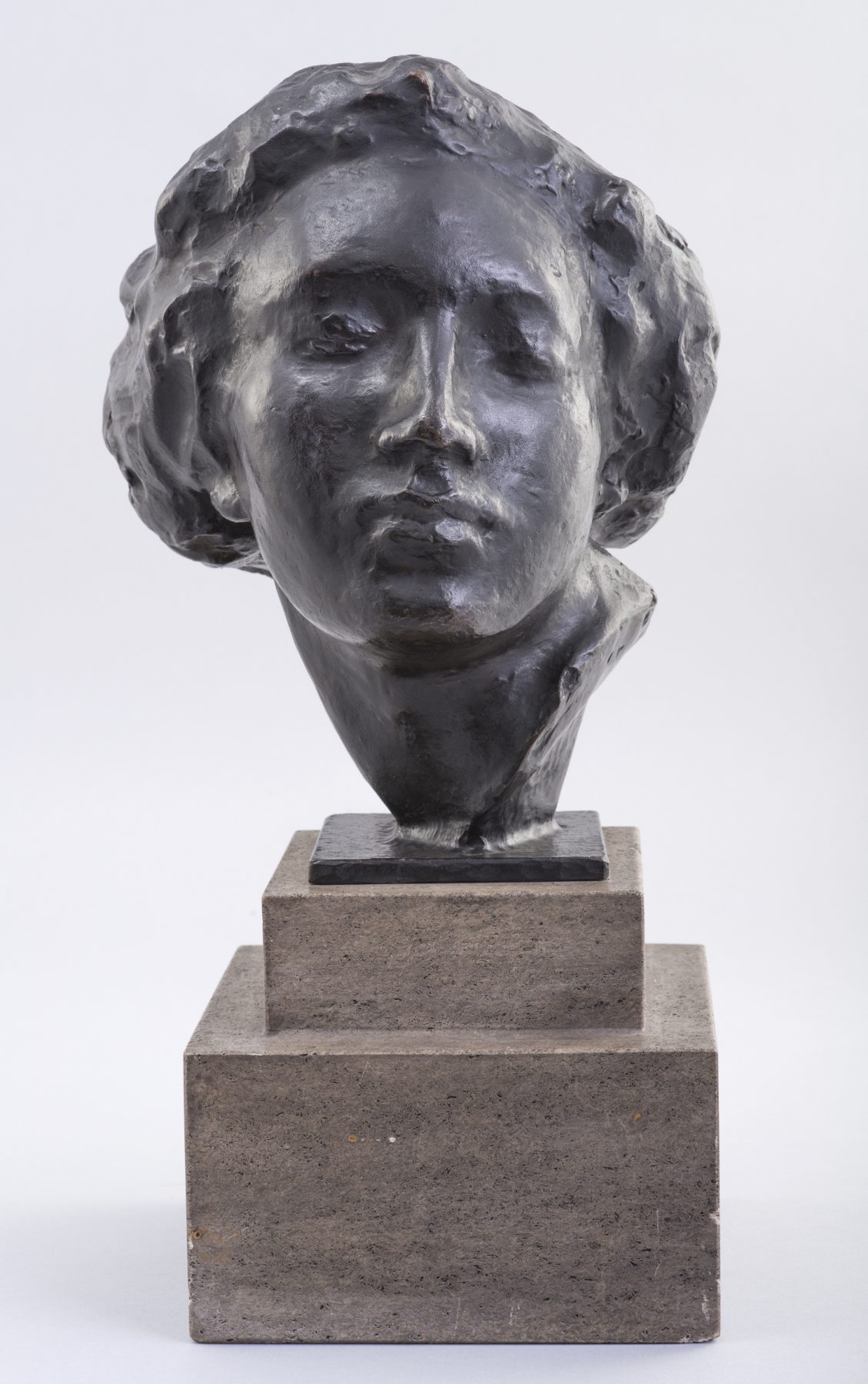
Georg Kolbe
1877 Waldheim – 1947 Berlin
Kolbe is considered one of the most significant sculptors of the first half of the 20th century. His artistic legacy documents a multifaceted body of work that is fundamentally shaped by his exploration of modern humanity, the movement of expressive dance, and the relationship between sculpture and space. In addition to his idealised and expressive nude sculptures, his artistic milieu also encompasses his diverse connections with female artists and architects of his time. Kolbe maintained close ties with artists such as Max Beckmann, Renée Sintenis, Ernst Barlach and Karl Schmidt-Rottluff, amongst others, and worked in dialogue with architects including Ludwig Mies van der Rohe, Walter Gropius, Hans Poelzig and Bruno Taut. His sculpture ‘Morgen’ was installed in Mies van der Rohe’s Barcelona Pavilion in 1929 and exemplifies the connection between Kolbe’s sculptural work and modernist architecture.
Kolbe’s studio and home in Berlin’s Westend district is also part of this context. Built in the late 1920s, the building was for him a place where art, nature and architecture were directly intertwined. Today, the site is home to the museum dedicated to Kolbe’s work, which has been preserving, managing and researching his complete artistic estate since 1950. As such, the site serves both as a repository for his work and as a starting point for exploring Kolbe’s artistic milieu and his significance for modern art.