Hans Arp
Der Nabel der Avantgarde
28. June 2015 – 11. October 2015


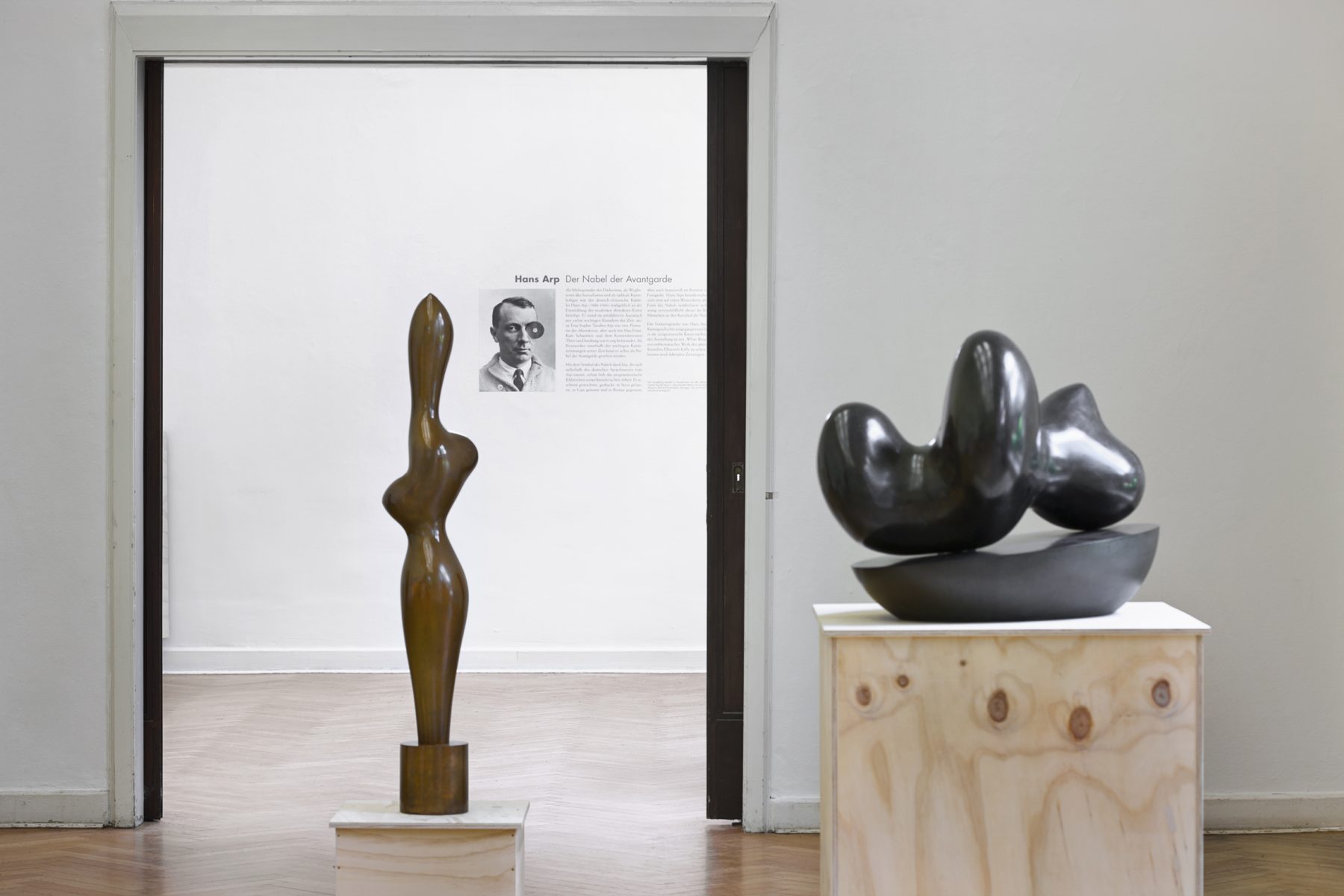
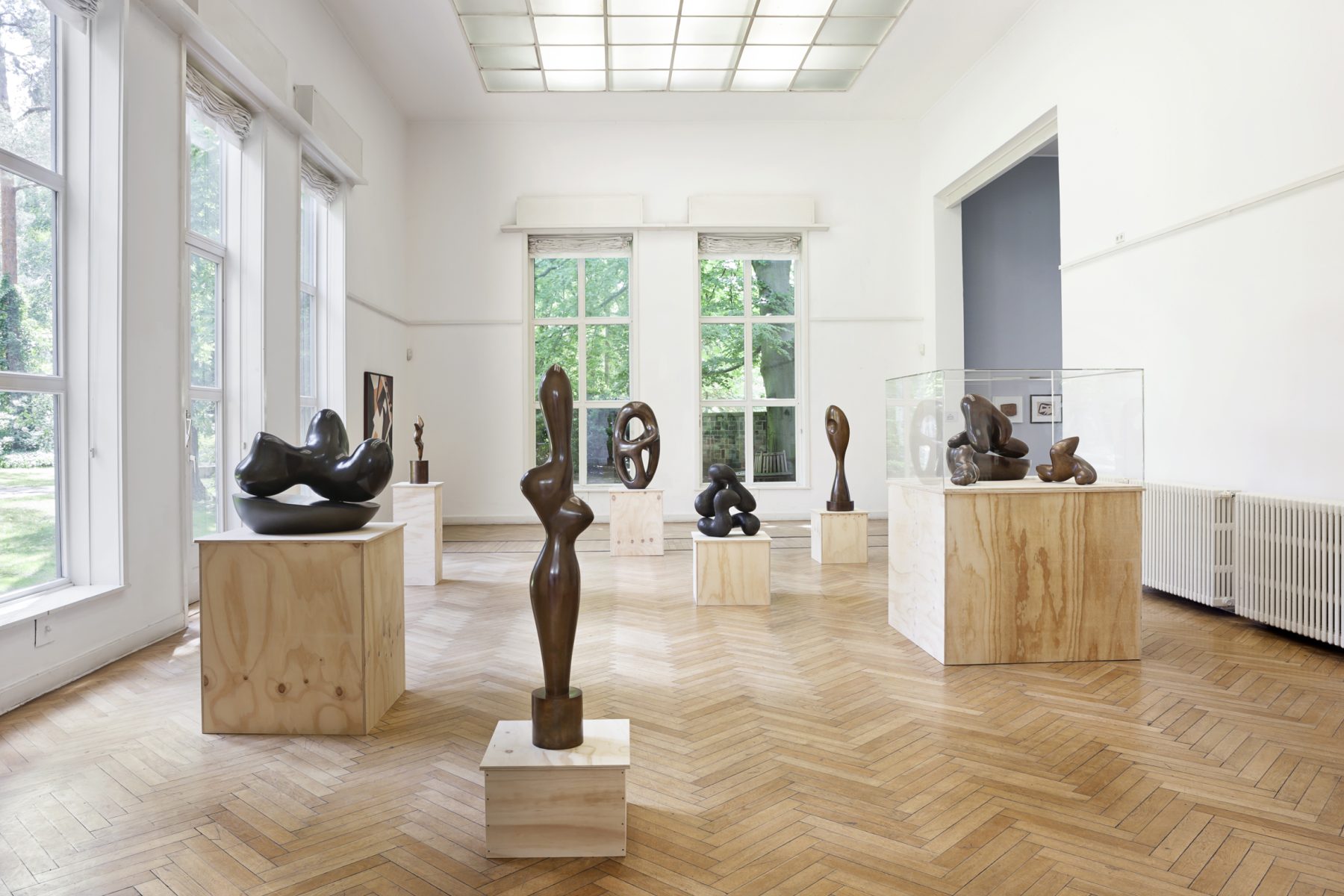
The exhibition ‘Hans Arp: The Navel of the Avant-Garde’ is dedicated to one of the most significant artists of the 20th century. As a co-founder of Dadaism, a pioneer of Surrealism and a radical artistic figure, he played a decisive role in the development of modern abstract art.
This major exhibition at the Georg Kolbe Museum is the first retrospective of Hans Arp’s work in Berlin. It offers a fresh perspective on this poetic and political artist and, with a wealth of sculptures, reliefs, prints, photographs, poems and texts, provides a comprehensive insight into his diverse body of work.
The artist was born Hans Peter Wilhelm Arp in Alsace in 1886. A staunch pacifist, he proclaimed Dadaism whilst in exile in Switzerland in 1916, alongside the writer Hugo Ball, amongst others. Dada was directed against war as well as against existing social and aesthetic norms, and provided important impetus for modern art. It was in Zurich that he also met his future wife, the artist Sophie Taeuber-Arp, with whom he collaborated closely until her death in 1943.
In the early 1920s, he turned to abstract surrealism and was a member of important avant-garde groups. He maintained close friendships with artists such as Kurt Schwitters, Theo van Doesburg, Max Ernst and El Lissitzky, which led to productive collaborations. From 1926, he lived and worked with Sophie Taeuber-Arp as a French citizen in Meudon-Clamart, near Paris. Following the German invasion of France, the artist couple fled to Switzerland in 1942. After the war, Arp – who had by then become extremely successful – lived in Meudon-Clamart and Locarno. Arp died in Basel in 1966 and was buried in Locarno.
André Schmitz, Chairman of the Georg Kolbe Foundation: “We are delighted to be able to present the works of Hans Arp, a contemporary of Georg Kolbe, in Kolbe’s wonderful 1920s studio house. Unlike Kolbe, however, whose lifelong theme was the human figure, Arp embarked on a completely new artistic path with abstraction. The exhibition showcases the work of an artist who was hugely influential on subsequent generations.”
Dr Julia Wallner, Director of the GKM, on the exhibition: “Hans Arp is both a critic of the modern worldview – and one of its strongest driving forces. His call to ‘return to nature’ and his forward-looking conception of art are of great significance for the 21st century – perhaps even more so than is realised. He recognised at an incredibly early stage what only became a social foundation of the Western world from the 1970s onwards, with the emergence of the New Social Movements, a widespread pacifism and a greater ecological awareness in the face of environmental destruction and resource scarcity.”
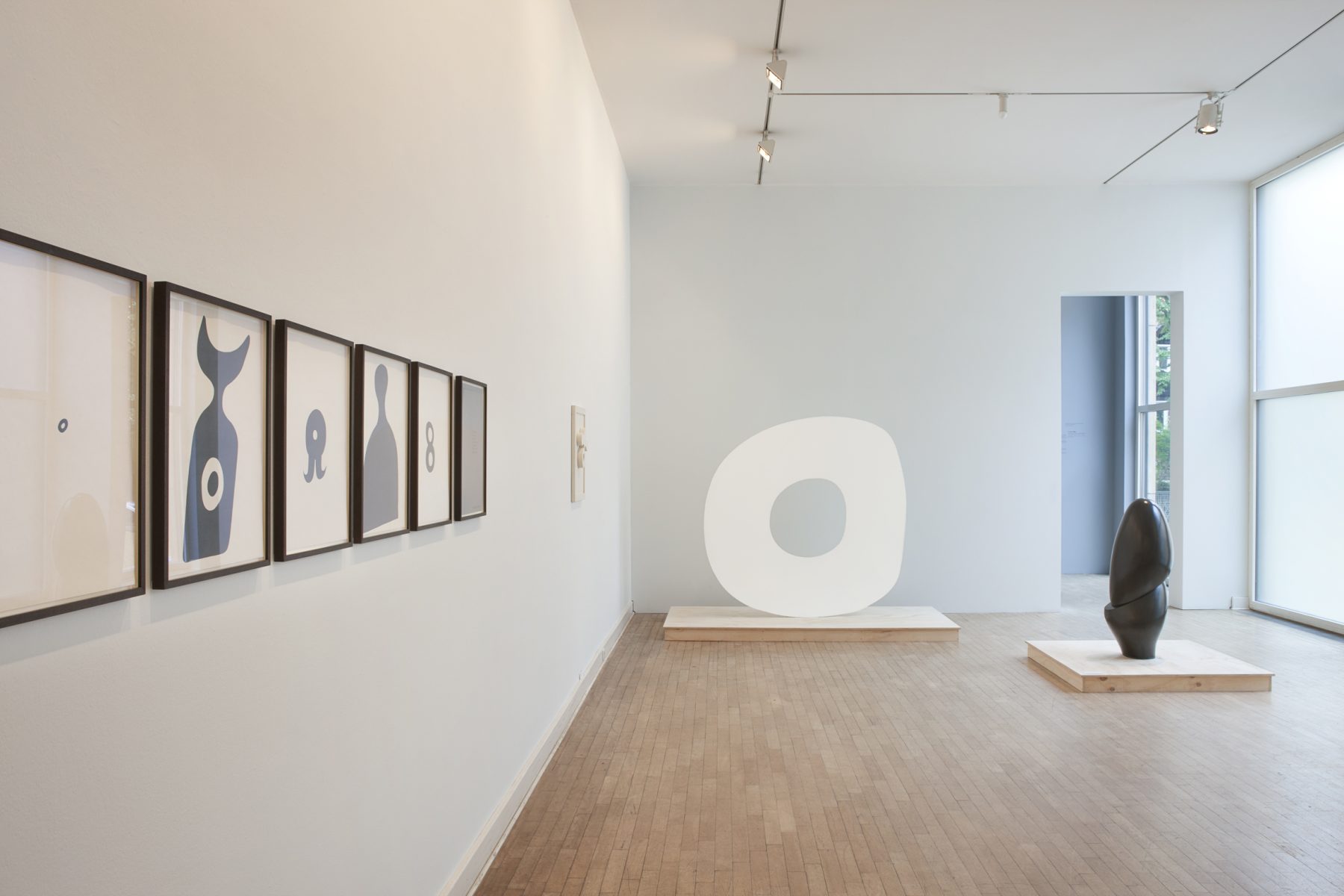
Arp found the programmatic symbol of his artistic work early on in the (visual) motif of the navel. It appears drawn, printed, carved in stone, moulded in plaster and cast in bronze, but also humorously staged in the context of photography. Hans Arp’s artistic interest is always directed towards an essential core, which he sees symbolised in the form of the navel as an elemental sign. At the same time, it symbolises humanity’s connection to the cycle of nature.
Arp’s distinctive formal language of fluid organic forms revolutionised the development of art. Alexander Calder drew inspiration from him, as did the American painter Ellsworth Kelly, whose emblematic work *White Ring* from 1963 is featured in the exhibition.
The exhibition is being organised in collaboration with the Hans Arp and Sophie Taeuber-Arp Foundation (Stiftung Hans Arp und Sophie Taeuber-Arp e.V.), Rolandswerth/Berlin, and with the support of the Arp Museum Bahnhof Rolandseck, Remagen. It is made possible by the Hauptstadtkulturfonds.